One of my very first wine articles in the Dutch Newspaper De Telegraaf /Spits (I have to digg in my memories but it have to be 30 years ago) was about a wine from the Maremma. The wine was made from the grape sangiovese, but they call it overhere the ‘little black one’ (morellino). Once I tasted this georgous wine I changed his name in the black beauty because I was so impressed by the lovely almost creamy texture and his Italian bravour. The wines are produced around the village of Scansano.
DOCG Morellino di Scansano
The medieval village of Scansano, about 500 meters above sea level, in the province of Grosseto, is tucked into the wild‑hearted Maremma of coastal Tuscany, and has quietly transformed into one of the region’s most irresistible destinations. Here, the wines carry the proud name Morellino, born from the rolling coastal hills that embrace the village. And yes—just as in the rest of Tuscany—the ever‑charismatic Sangiovese takes center stage. Only in Scansano does it adopt its local alias, Morellino, a name that seems to wink at you as you swirl your glass. Since the 2007 vintage, Morellino di Scansano has held the esteemed DOCG status, a well‑deserved nod to its growing reputation.
This corner of Tuscany basks in generous sunshine, and you feel it immediately: an almost electric vitality in the air, as if the land itself hums with energy. The vines thrive on it, and frankly, so do the people. A walk through the vineyards is both grounding and invigorating—one of those rare experiences that clears the mind while awakening a very real appetite. Luckily, Scansano and its surroundings offer a culinary landscape as diverse and inviting as the wines themselves.
Morellino is the local nickname for sangioves and refers to the dark color of the horses (morelli horses) the morelli cherry, known for his dark color and tart accidity and the appearrance, describe the small berries of this specific sangioves clone.
The wine is being softer and more approachable when young than the most Tuscan reds, due to the coastal influence of the Tyrrhenian Sea.
The village of Scansano
what gives today its name to the Cooperative and to the denomination, was established in the Middle Ages: the first documents attest its existence from the 12th century A.D., even though the urban nucleus most likely dates back to a hundred years earlier. Until the 15th century, Scansano was owned by the noble Aldobrandeschi family and then passed into the hands of the Republic of Siena. A new, important chapter in the town’s history began in the 16th century, with a phase of urbanisation and demographic growth stimulated by agriculture, mining and a favourable climate. Three centuries later, in the 19th century, Grosseto’s public offices moved to Scansano for the summer season, further stimulating the city’s growth. During this same period, wine-growing expert Vannuccio Vannuccini, during a conference in Paris, praised the qualities of Morellino di Scansano, stressing that the potential of local wines could only be expressed through the work of a cooperative. His words did not go unheard: a century later they would become a reality thanks to the work of the Vignaioli del Morellino di Scansano, guardians of a history with deep roots.
Cantina Cooperativa Vignaioli del Morellino di Scansano
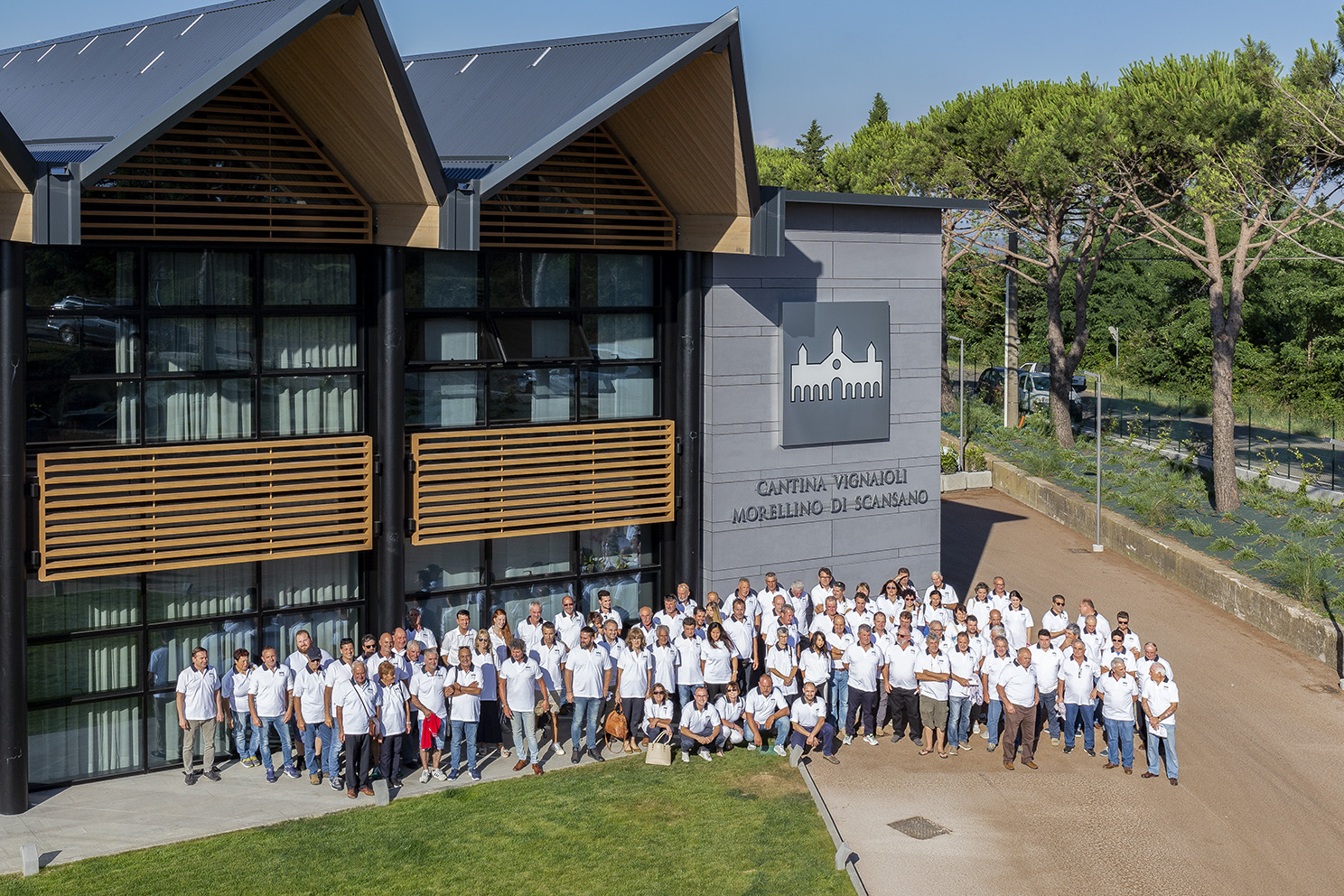
(on the big photo cooperative members, the President Benedetto Grechi, the General Manager Sergio Bucci, and the oenologist Paolo Caciorgna)
If you want to understand Scansano, start where the heartbeat is loudest: Cantina Cooperativa Vignaioli del Morellino di Scansano. Founded in 1972 on the simple idea that small growers are stronger together, the cooperative now unites 60 producers who have been tending these hills for generations. It’s a place where tradition is not a slogan but a daily practice—though never without a wink of curiosity for what else the land might reveal. Back in 1972, Morellino tried to position itself as the “starter wine” for a new and eager market—more terroir than polish, more enthusiasm than refinement. But by the early 1980s, the region found its stride, and quality took a confident leap forward.
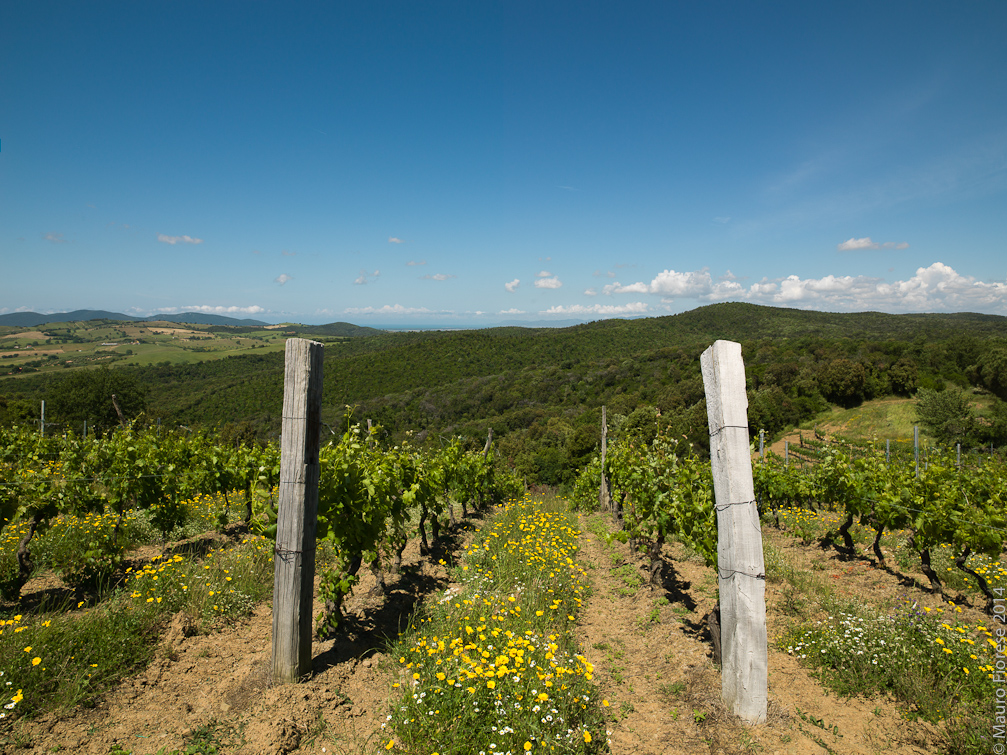
Today, over 90% of the production of the Cooperativa is bottled and sold within Italy, slipping into the shelves of carefully chosen wine shops and the hands of sommeliers who know exactly what they’re pouring. The vineyards cling to hillsides overlooking the sea, where traditional varieties still rule the roost. Ofcourse the Sangiovese but nowedays you cant overlook the white wines from the Maremma, made from there local hero Vermentino—the region’s crisp, sea‑kissed reminder that the Mediterranean has shaped not only the climate, but centuries of trade, taste, and storytelling.
The grape varieties
Sangiovese Sangiovese is one of Italy’s most important red grape varieties; the cluster found in Maremma is locally called Morellino. Also grown abroad, for example in California or Argentina, its origins are very ancient and it was presumably already known to the Etruscans – the name Sangiovese, in fact, probably derives from Sangue di Giove, (Jupiter’s blood).
Ciliegiolo According to some studies, it was brought to Tuscany by pilgrims returning from Santiago de Compostela in the 19thcentury. More recent studies state that it originated in Italy, and could be the father of Sangiovese. The name is due to its colour, similar to that of ripe cherries. Once very popular, it has long been used in blends together with Sangiovese.Recently, it is more and more often vinified as a single variety.
Vermentino The origins of Vermentino are still uncertain. Most likely the grape variety came from Spain or France. Today, it iscultivated in northern Sardinia and on the coast of Liguria and Tuscany, from the Apennines to Maremma. Its proximityto the sea allows this grape variety to impart elegant marine and savoury notes to the wine.
Alicante This grape variety has French origins and was created by Henri Bouschet, who crossed Grenache with Petit Bouschet.The result is a very richly coloured grape variety that can be vinified on its own or used to give a richer colour to ablend. It is commonly found in France and Spain. In Maremma, particularly in the municipalities of Scansano and Magliano in Tuscany, it has long been used together with Sangiovese in Morellino di Scansano.
The tasting
Wine 1: La Vie del Mare — Viognier & Chardonnay 2024, 13.5% (DOC)
Viognier may not always steal the spotlight in Tuscany, but here in Maremma it has been part of the local rhythm for far longer than most people realize. Chardonnay, too, has settled in comfortably. Together, they create a wine that opens with juicy plum notes, delicate florals, and those unmistakable Mediterranean whispers. The Chardonnay adds its golden apple charm, while the Viognier brings sun‑kissed golden plum.
On the palate, the wine is round and generous, with that signature Maremma minerality and a fresh, lively finish. It’s crafted to be enjoyed without overthinking — a medium‑bodied, dry white with a long, citrus‑laced afterglow, raised entirely in stainless steel. Harvest arrives at the end of August, and the wine happily pairs with fish, vegetables, white meats, and pasta. All that pleasure for just seven euros.
To create this cuvée, they decided to marry the lowest coastal hill — home to Viognier — with the volcanic inland soils where Chardonnay thrives. Two terroirs, two personalities, one glass. The result carries a subtle salty breeze from the sea and a firmer backbone from the Chardonnay. Both varieties are harvested at the end of August in a perfect 50/50 balance.
Near the coast, the vines are shielded from direct sunlight, keeping every leaf intact as natural protection. Inland, the leaves are removed to let the grapes breathe. The real challenge lies with Viognier: left to its own devices, it ripens with wild enthusiasm, so careful shading is essential to keep it from tipping into sweetness.
The Viognier grows between 60 and 200 meters above sea level, while the Chardonnay sits at 200 meters, about 35 kilometers from the coast — close enough to feel the sea, far enough to develop its own quiet strength.
Wine 2 — Vermentino Vigna Fiorini, DOC 2024 (14.5%)
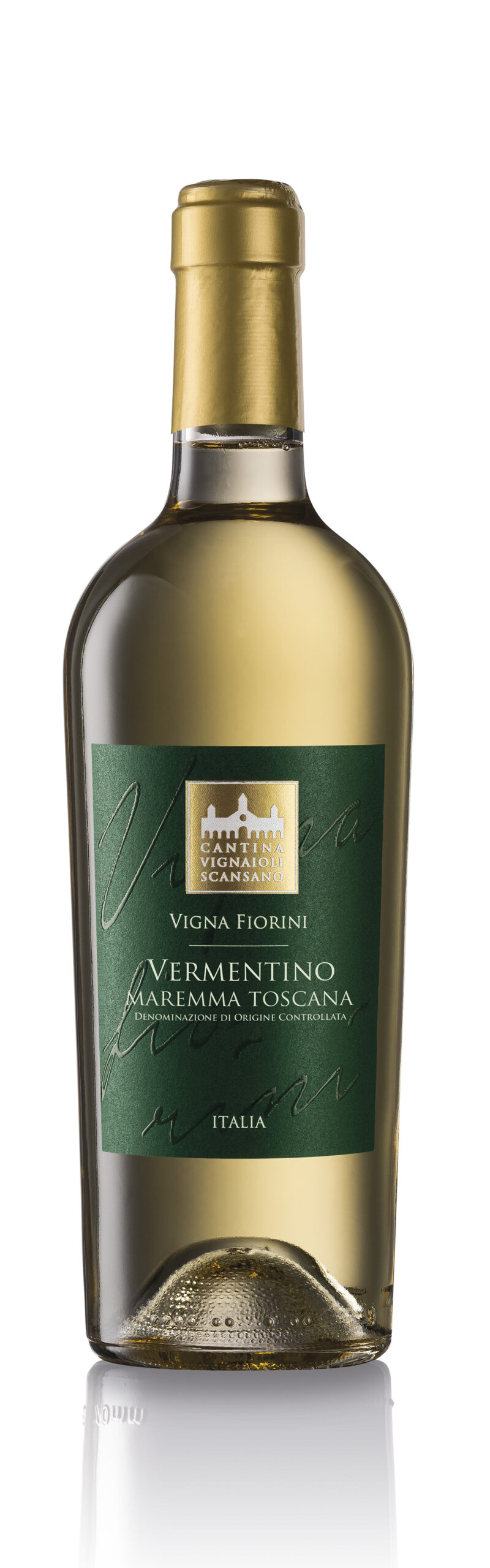 Once upon a time, Vermentino had a habit of arriving at the party a little too late—overripe, enthusiastic, and frankly a bit too eager to please. Those days are left behind . Now they wait patiently until the Sangiovese is ready, and that is the cue to harvest the Vermentino as well. They gives the grapes a longer flirtation with their skins before fermentation and adds depth without tipping into excess.
The vineyards stretch between 60 and 200 meters above sea level, a gentle rise that quietly shapes the wine’s character. They hold onto tradition with both hands, yet not afraid to let modern techniques slip in where they make sense. Previous owners chased quantity; the Cooperativa turned the ship firmly toward quality—no shortcuts, no compromises. The blend is created, like all good wines do right in the vineyard.Because it’s a true field blend, all varieties are harvested together. during 10 days.
This particular wine carries 15% Viognier, adding a soft, aromatic glow to the blend. Expect a harmonious dance of minerality and ripe—but never overripe—fruit. Think plums with restraint, a touch of honey, and a whisper of bergamot that lifts the whole bouquet. Despite its late‑harvest personality, the wine remains fresh, mineral, and beautifully dry, with a full body and a complex aromatic profile.
Fermentation begins without the skins, and Vermentino leads the way at 85%, with Viognier (15%) playing the elegant supporting role.
Wine 3 — Vermentino Superiore “San Bruzio” DOC 2023 (14%)
If there is one wine that tells the story of curiosity, patience, and a touch of Tuscan stubbornness, it’s this Vermentino Superiore San Bruzio. Over the years, wthey have experimented boldly with aging Vermentino, searching for a way to coax even more character from this expressive grape. The answer lay in a different terroir—one with richer clay and volcanic soils—and in giving the skins a little more time to work their magic.
After two days of fermentation, the wine settles in for an extended stay on the lees, slowly building volume, texture, and complexity. Normally, this cuvée is released a year after harvest, but this vintage asked for more time. So they listened. It finally emerged two years later, in January. The taste has notes of melon, rosemary, and wild herbs—an elegant, balanced bouquet that feels both familiar and quietly surprising.
A note on climate: Around the year 2000, Maremma experienced a dramatic climatic shift. Temperatures soared, and both red and white wines became muscular, powerful, and—let’s be honest—sometimes a little too bold for their own good. The rustic charm of earlier vintages seemed to slip away in the heat. But knowledge evolves. Today, with far better temperature management and vineyard insight, they craft wines that strike a beautiful balance: neither overly strong nor timid, but expressive, poised, and unmistakably Maremma.
Consumer tastes have also changed. Lighter, fresher, lower‑alcohol whites are in demand, and the Cooperativa embraced that shift without losing there identity. This wine was introduced to the market just six months ago, mostly outside Italy, where it has quickly found its audience.
A word from the winemaker: “I began my winemaking journey at the end of the 20th century, when selling white wines from Maremma was nearly impossible. How things have changed. Today, 35% of our production is white—and they’re gaining real momentum. Maremma has become known for producing some of the most expressive Vermentino wines in Italy.”
Wine 4 — Merlot & Cabernet “Le Vie del Mare” DOC 2022 (13.5%)
This blend may not be the classic calling card of Maremma—Sangiovese usually claims that spotlight—but Le Vie del Mare has no intention of apologizing for its difference. With 50% Merlot, 20% Cabernet Sauvignon, and 30% Cabernet Franc, it’s a wine that steps confidently onto the stage with its own rhythm.
Vinified entirely in stainless steel, it keeps things refreshingly uncomplicated. No oak, no drama—just pure, juicy fruit. On the nose, you’re greeted by a basket of forest berries and bright red fruit. On the palate, the ripe Merlot wraps everything in a silky embrace, while the Cabernets add just enough tannic backbone to keep the wine lively and structured. It’s the kind of red you open without overthinking, pour generously, and enjoy with the ease of good company. it’s a reminder that pleasure doesn’t always need a grand gesture.
Wine 5 — Morellino di Scansano “Roggioano” 2023 DOCG (14%)
Morellino di Scansano is the beating heart of the cellar — the wine that tells the true story of Maremma. Made entirely in stainless steel, it shows its character with refreshing honesty: bright fruit, clean lines, and an elegance that never tries too hard. Think Sangiovese, but with a Mediterranean breeze running through its hair.
The vines behind this wine are old souls, and they insist on continuity. New plantings must come from the old ones, preserving the lineage that gives Morellino its unmistakable charm. In the glass, the color sits comfortably between light and deep — a perfect expression of the grape rather than a performance.
To keep things interesting, 5% Alicante joins the blend. A Spanish cousin of Grenache, Alicante thrives here only when coaxed from venerable old vines. It adds a subtle twist, a quiet depth, and a reminder that Maremma has always been a crossroads of cultures and grapes.
Wine 6 — Roggiano Riserva 2022 DOCG (14.5%) If the classic Morellino is the heartbeat of Maremma, then the Roggiano Riserva is its deeper, slower, more deliberate breath. A wine that doesn’t rush, doesn’t shout, and certainly doesn’t apologize for taking its time. With a production of 40,000 bottles, it’s crafted with intention: 100% Sangiovese, aged for twelve months in 225‑liter oak barrels — a thoughtful mix of first and second use, with 25% new oak to keep things lively.
Historically, the Riserva was made in tiny quantities, almost a secret whispered among locals. But with improved techniques and a clearer vision, it has grown into a confident, premium expression of the region. The result is a wine that’s spicier, deeper, and more harmoniously balanced than its younger siblings. The palate is round and generous, yet the unmistakable freshness of pure Sangiovese keeps everything bright. Ripe, but never heavy. Structured, but never stern. A wine that plays well with food — and even better with good company.
A note from the winemaker: “We’ve been working sustainably for fifteen years now. Going fully organic everywhere is a challenge — the landscape doesn’t always cooperate — but sustainability allows us to track, adjust, and improve with real precision.”
And that philosophy shows in the glass. The Riserva feels grounded, thoughtful, and quietly confident — a wine shaped by experience, patience, and a deep respect for the land.
Closing the story With the Riserva, the journey through Maremma comes full circle. From the bright Vermentinos to the playful coastal reds, from the classic Morellino to this deeper, oak‑kissed expression, each wine tells a chapter of a region that has learned to honor its past while embracing its future. Maremma may once have been overlooked, but today it stands proudly among Tuscany’s most expressive landscapes — and the Roggiano Riserva is its final, lingering punctuation mark. And I found another black beauty