The house
Pierre Gerbais is based in Celles-sur-Ource, a small village in the Côte des Bar. It’s been family-run for 8 generations, now led by Aurélien Gerbais (who took over from his father Pascal). They farm about 18 hectares organically/sustainably (certified HVE) and have been working without herbicides since 1996. They’re known for championing Pinot Blanc — especially the rare “Pinot Blanc Vrai” — alongside Pinot Noir and Chardonnay. Style-wise, they’re more “Burgundian” than big-house Champagne: low dosage, terroir-driven, lots of time on lees.
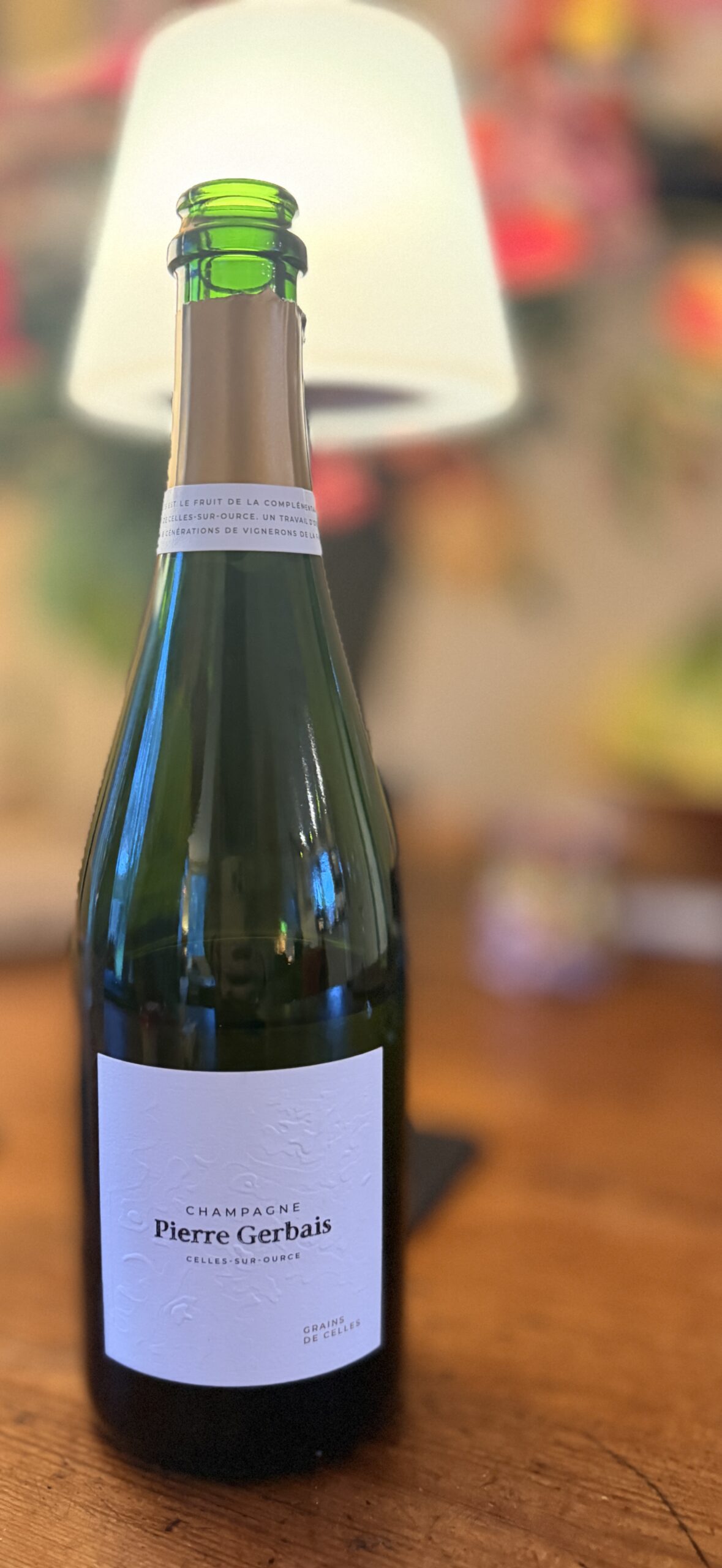
The cuvée “Grains de Celles”
This is their flagship non-vintage (or multi-vintage) blend, meant to represent all their best parcels in Celles-sur-Ource.
• Blend: 50% Pinot Noir, 25% Chardonnay, 25% Pinot Blanc Vrai
• Vintage base: 2022 (Vendanges 2022)
• Disgorgement: April 2025
• Dosage: Extra Brut (∼3-4 g/L) — very dry
• Aging: ∼30 months on lees in bottle before disgorgement
Style: Expect something dry, focused and mineral with creaminess from the lees aging. The Pinot Noir gives weight and structure, Chardonnay brings citrus/floral lift, and the Pinot Blanc adds a soft, rounded texture with notes of pear, white flowers, and a slight saline/chalky finish. It’s often described as understated, fresh, and gastronomic rather than fruity or showy.
Price: Usually around €55–€70
It’s a grower Champagne that sommeliers love — precise, low-intervention, and showing the character of the Aube’s Kimmeridgian (limestone + marl) soils.
Personal notes
Champagne Pierre Gerbais – Grains de Celles 2022. Degorcement april 2025
This isn’t a champagne that shouts. Pierre Gerbais, from the southern Côte des Bar with its limestone and Pinot Noir at the core (50%) makes wines you have to learn to listen to. The Grains de Celles (extra brut, 25% Pinot Blanc and 25% Chardonnay) is one of those bottles.
In the glass: pale gold, fine mousse that doesn’t bubble hysterically but rises in calm, lazy threads, like it’s in no hurry.
The nose starts out reserved — wet stone, white blossom, a hint of green apple. But give it five minutes and there it is: toasted hazelnut, warm brioche, and something that reminds me of lemon zest you’ve just scratched open with your fingernail. No candy shop, no tropical fruit party. This is the Aube at its most honest.
On the palate you immediately taste why Gerbais has such a cult following. Dry, yes (extra brut, 2-3 grams), but not austere. The acidity is bright, almost chalky — you taste that Kimmeridge soil under Celles-sur-Ource. Mid-palate the fruit comes through: ripe Conference pear, white peach, but with a savoury undertone, as if someone slipped in a pinch of sea salt. The finish is long and taut, with that typical bitter-almond note Pinot Blanc can do so well.
What I like here: it’s not a status champagne. No logo fuss, no marketing talk. This is grower champagne in the best sense of the word — made by Aurélien Gerbais, who works biodynamically and vinifies his parcels separately, with advice from oenologist-consultant Philippe Narcy from Wintzenheim. You taste the place, you taste the year, you taste that it hasn’t been smoothed over with dosage.
When to drink it: Not with oysters on New Year’s Eve. Better with pan-fried sea bass and butter sauce, or just on a Thursday with aged cheese and good bread. It can handle some air, so pour it in a wine glass, not one of those flutes where everything disappears.
Score? I don’t do points, but this is a bottle I’d buy again. And in the end, that’s the only thing that matters.